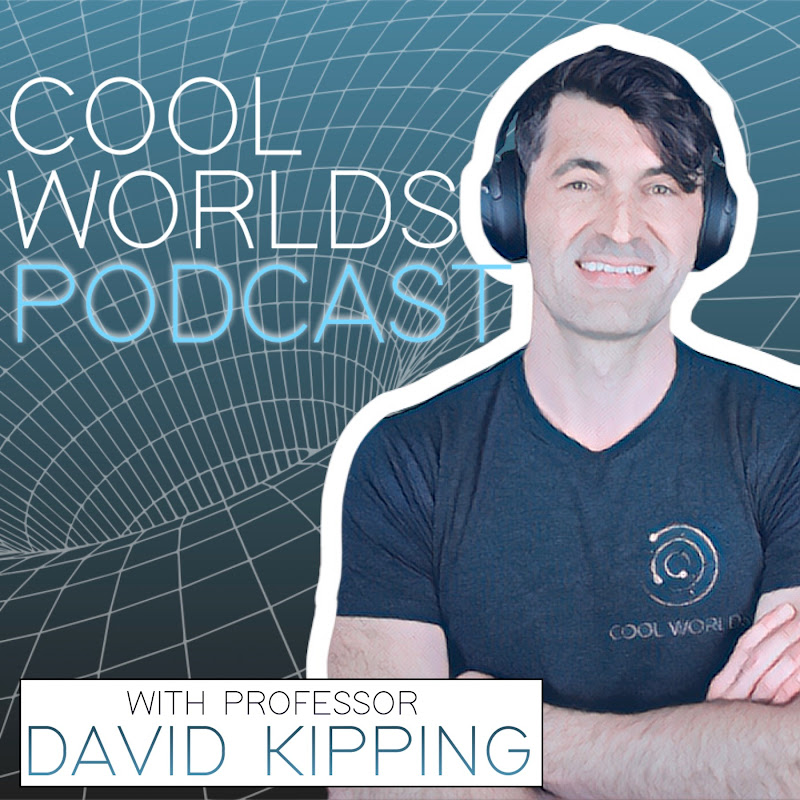
Cool Worlds Podcast
Hosted by Cool Worlds
A Columbia University astronomer's deep-dive conversations with fellow scientists about exoplanets, astrobiology, and the future of discovery.
This is a peer-to-peer academic podcast where an expert host interviews fellow experts for a knowledgeable audience. Conversations are technically dense, exploring the history, methodology, and controversies within exoplanetary science and astrobiology, often assuming listener familiarity with core concepts.
“Unlike broader science shows, this podcast operates at a graduate-level, with the host acting as an expert peer rather than a layman journalist. This leads to unusually specific and technical lines of questioning, creating a collaborative rather than purely inquisitive dynamic.”
Who hosts this show
The official podcast of the Cool Worlds Lab at Columbia University, hosted by Associate Professor David Kipping. The show features long-form, technical conversations with fellow academics and researchers in fields like astronomy, physics, and astrobiology. Episodes are filmed and can be found on the Cool Worlds YouTube channel.
Credentials & credits
- Associate Professor, Columbia University
- PhD in Physics and Astronomy, University College London
- MSc in Natural Sciences, University of Cambridge
- MA in Natural Sciences, University of Cambridge
- Leader of the Cool Worlds Lab
- Founder of the Hunt for Exomoons with Kepler project
Other ventures
- Cool Worlds Lab
- Cool Worlds (YouTube Channel)
- The Hunt for Exomoons with Kepler (HEK) Project
What kind of podcast
- Country
- United States
- Region
- usa
When new episodes drop
- 01#33 Sarah Rugheimer - LIFE Mission, Prebiosignatures, MountainsJun 27, 2026 · 1h 55m
- 02#32 Chris Lintott - Technosignatures, Citizen Science, ScicommApr 13, 2026 · 1h 37m
- 03#31 Joshua Winn - Exoplanet New Discoveries, History and FutureFeb 12, 2026 · 1h 07m
- 04We Need To Talk About AI...Feb 1, 2026 · 1h 15m
- 05#29 Nick Bostrom - Simulation Theory, Anthropic Reasoning, Great FiltersJan 28, 2026 · 1h 06m
- 06#28 Néstor Espinoza - JWST, Exoplanet Atmospheres, Molecule DetectionDec 5, 2025 · 1h 41m
- 07Fastest Airplane Boarding The Science Behind It!Nov 10, 2025 · 3 min
- 08
Notable episodes
- 01#33 Sarah Rugheimer - LIFE Mission, Prebiosignatures, Mountains
A deep, technical discussion on the methods and philosophical challenges of searching for life, exemplifying the show's peer-to-peer academic style.
- 02#31 Joshua Winn - Exoplanet New Discoveries, History and Future
Filmed in the guest's office at Princeton, this episode covers the surprising history of exoplanet discoveries from a leading expert in the field.
- 03We Need To Talk About AI...
A rare solo episode where host David Kipping breaks format to discuss the implications of AI, showing his personal engagement with broader scientific topics.
What you'll be asked on this show
Kipping opens by establishing a guest's work, often through their latest book or a major historical discovery in their field. His style is collaborative, using his own expertise to build on a guest's answer and frame the next, more specific question. He probes for nuance by asking about historical context ("Did X blindside the field?"), clarifying scientific classifications ("Are these distinct classes or a continuum?"), and exploring controversies or anomalies ("What's really going on with 'super-puffs'?"). He frequently asks guests for their personal perspective on discoveries and addresses common criticisms of a particular research strategy.
Primarily a one-on-one interview show, often filmed in person at a guest's university office. Kipping occasionally releases solo episodes on timely topics. He provides long, personal introductions to guests, often noting their shared academic history, and has a members-only "afterthought" segment.
Questions Cool Worlds keeps coming back to
12 cataloguedIf you're going on this show as a guest, expect some version of each of these. Each note explains when Cool Worlds reaches for it.
process
4- Q.01
“Can you tell us about your latest book or major work?”
A common opening to frame the conversation around the guest's most recent thinking.
- Q.02
“How do you actually look for [phenomenon], and which method excites you most?”
An opening question that grounds the discussion in methodology and the guest's passion.
- Q.03
“Is it worrying that we can't confirm [local example] for our prospects on [distant example]?”
Connects challenges in well-studied cases to the confidence in more remote ones.
- Q.04
“What do the challenges of finding [X] here teach us about searching for it out there?”
Asks the guest to extrapolate from local, difficult problems to broader, interstellar ones.
history
2- Q.01
“What major discoveries have changed our perspective from the initial template?”
Used to establish historical context and the evolution of the field.
- Q.02
“Did the discovery of [X] by [method Y] blindside the field at the time?”
Probes the human and historical context of a major scientific breakthrough.
personal
1- Q.01
“What are some of your personal favorite discoveries that have changed your own thinking?”
Moves from the general state of the field to the guest's personal scientific journey.
controversy
2- Q.01
“Is the community too focused on [specific strategy], and what's the case for it?”
Directly addresses common critiques or debates within the scientific community.
- Q.02
“What's really going on with [anomalous finding], and what have we learned so far?”
Focuses the conversation on a specific, puzzling mystery at the edge of current knowledge.
technique
1- Q.01
“Are [type A] and [type B] distinct classes, or are they a continuum?”
Seeks to clarify scientific definitions and classifications for the audience.
values
1- Q.01
“Do we need a concrete definition of [concept] to be able to search for it?”
Pushes the conversation into the philosophical underpinnings of the scientific search.
future
1- Q.01
“Is [recent finding] an important clue and likely a common trend?”
Asks the guest to speculate on the broader implications of a new, specific data point.
Signature segments
- · Afterthought segment (members-only)
Topics covered repeatedly
Who gets booked here
Guests are almost exclusively academic peers of the host—professors and researchers from top universities like Oxford, Princeton, and Edinburgh, who are leading figures in their specific sub-fields of astronomy or physics.
- Sarah Rugheimeron #33 Sarah Rugheimer - LIFE Mission, Prebiosignatures, Mountains
- Chris Lintotton #32 Chris Lintott - Technosignatures, Citizen Science, Scicomm
- Joshua Winnon #31 Joshua Winn - Exoplanet New Discoveries, History and Future
- Nick Bostromon #29 Nick Bostrom - Simulation Theory, Anthropic Reasoning, Great Filters
- Néstor Espinozaon #28 Néstor Espinoza - JWST, Exoplanet Atmospheres, Molecule Detection
Where to find this show
Audience & reach
The show is sponsored by VPNs, data privacy services (Incogni, NordVPN), and occasional tech products. It also directly solicits support for the host's research lab at Columbia University.
Subscriber and view counts are pulled live from YouTube and re-verified on a 30-day cycle. Listener estimates for the RSS feed aren't published here unless they're host-verified.
Pitch Cool Worlds
d•••@•••.edu+•• ••• ••• ••••Free: limited reveals · Pro: unlimited reveals + CSV export
You’re only charged when we return a verified hit.
People also ask
- Who is the host of the Cool Worlds Podcast?
- The podcast is hosted by David Kipping, an Associate Professor of Astronomy at Columbia University where he leads the Cool Worlds Lab.
- What is the format of the show?
- It's primarily a long-form interview show where Professor Kipping speaks with other academic experts. He occasionally releases solo episodes on specific topics.
- Is the podcast still active?
- Yes, the podcast releases new episodes on a roughly monthly basis.
- Where can I listen to the podcast?
- The full video episodes are available on the 'Cool Worlds' YouTube channel, which is the primary platform for the podcast.
- What is the Cool Worlds Lab?
- The Cool Worlds Lab is a research group at Columbia University, led by David Kipping, that studies extrasolar planetary systems. The podcast is an official outreach project of the lab.
- Who are the typical guests?
- Guests are typically professors and researchers in astronomy, physics, and related fields from institutions like Oxford, Princeton, and the Space Telescope Science Institute.
Built from the show's public RSS feed, YouTube, the host's own websites, and the cited sources below. Computed and AI-extracted fields are labelled. Facts only — no private info, no fabrication, no transcripts republished.
Sources & how this page was built
This page is AI-assisted, grounded in the public sources cited below, and host-verifiable. We publish facts only; we do not republish transcripts. If anything here is wrong, the host can claim and correct the page above.Model: gemini-2.5-pro · high confidence
Podcasts like Cool Worlds Podcast
Thomas Brush
Thomas Brush
A podcast for aspiring indie game developers, hosted by a solo dev who interviews peers about the practical and emotional journey of making games.

Rusty Quill Podcasts
Rusty Quill Podcasts
A network feed from a London-based production house specializing in full-cast speculative fiction and horror audio dramas.

Satish K Videos
Satish K Videos
An interview show that deconstructs the business models of successful Indian entrepreneurs, with a sharp focus on revenue, strategy, and digital tools.

The American Business Podcast (ABP)
A live, daily business podcast that doubles as the media arm for a national, digital-first chamber of commerce.

Jay Clouse
Jay Clouse
A podcast and video series breaking down the business of being a creator, with a strong focus on building membership communities.

The Senior Health Podcast
A health show for seniors offering simple, actionable exercises and habit changes based on the philosophy of "Japan's Oldest Doctor."
Dear Shandy Podcast
Dear Shandy
A married couple offers comic relief and practical advice on relationships, alongside detailed, analytical recaps of reality dating shows.
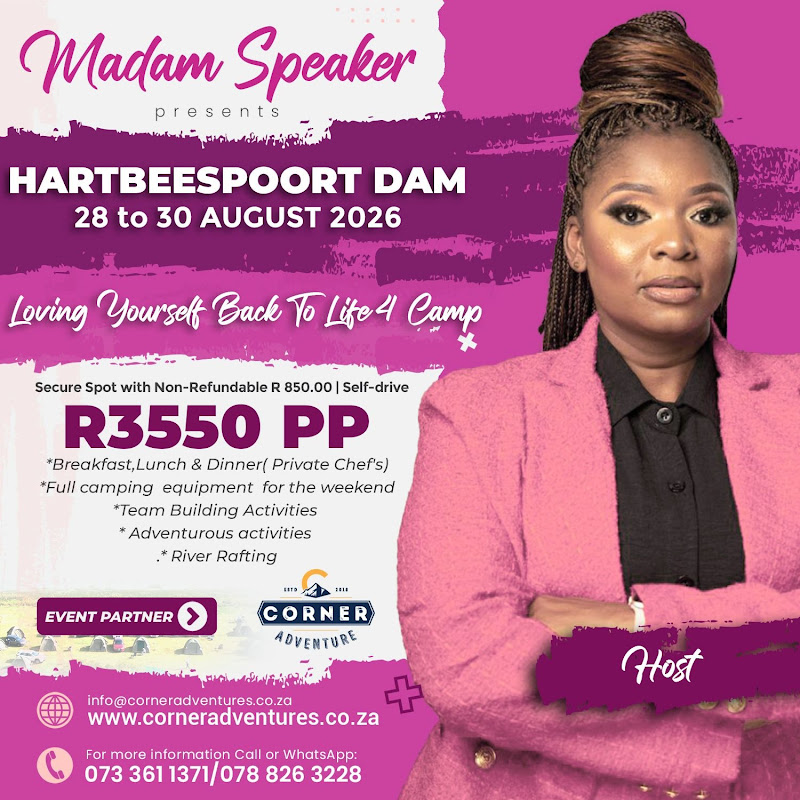
Madam Speaker
Madam Speaker
A South African talk show where a social activist helps guests and callers navigate trauma, relationship crises, and the path to self-love.