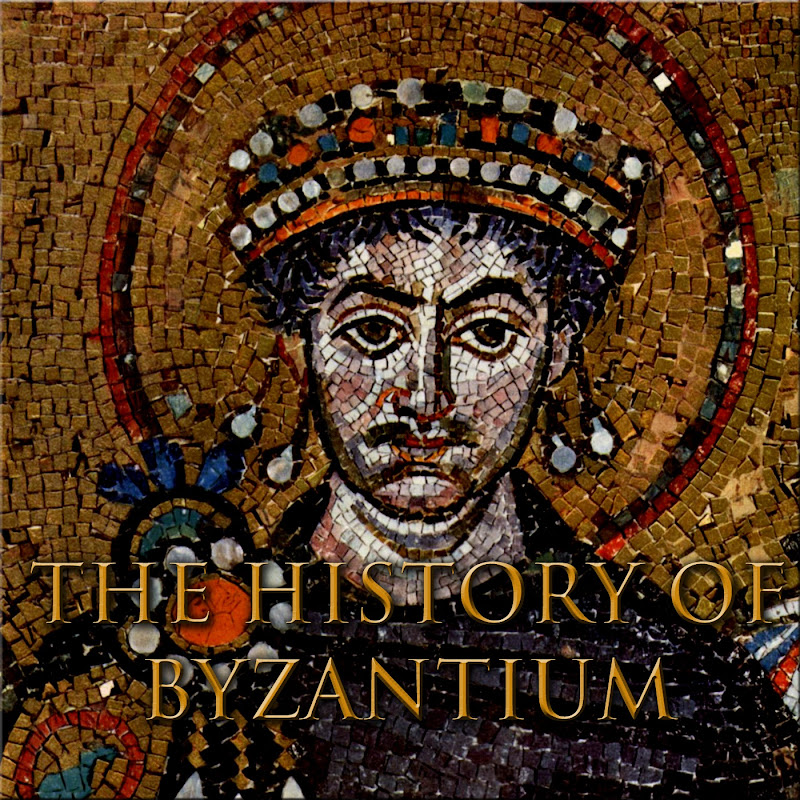
The History of Byzantium Podcast
A comprehensive narrative podcast detailing the entire history of the Eastern Roman Empire, from the fall of the West in 476 to Constantinople in 1453.
A long-form audio documentary that picks up precisely where Mike Duncan's "The History of Rome" concluded, dedicating itself to the thousand-year saga of the Eastern Roman Empire. The show's primary format is a chronological narrative, but it regularly pauses for thematic episodes on society, culture, and listener questions, as well as in-depth interviews with leading academic specialists on topics like law, theology, and specific historical figures.
“Its defining feature is its exhaustive, chronological commitment to a millennium of history that popular culture often ignores. Unlike many history podcasts, it successfully blends a solo narrative style with high-level academic interviews, using experts to add depth to the established timeline.”
Who hosts this show
Hosted by Robin Pierson, "The History of Byzantium" was created as a direct successor to Mike Duncan's acclaimed "The History of Rome" podcast. It began as a chronological, state-centric narrative and has since evolved to include deep-dive interviews with academic historians and thematic episodes covering broader cultural topics. Initially a part-time project, listener support has enabled Pierson to make the podcast his full-time occupation, which now includes leading historical tours in Turkey.
Credentials & credits
- Podcast Host/Creator, The History of Byzantium
- Studied Classics at school
- Former TV critic and podcaster (thetvcritic.org)
Other ventures
- The History of Byzantium Tours
- Patreon for bonus content and ad-free episodes
- Kickstarter campaign (2018) to fund a research trip to Istanbul
- Etsy Store (ImperialWares)
What kind of podcast
When new episodes drop
- 01Episode 336 – 10 Influential East Romans with Anthony Kaldellis Part 2May 23, 2026 · 1h 11m
- 02Episode 335 – 10 Influential East Romans with Anthony Kaldellis Part 1Mar 18, 2026 · 1h 15m
- 03Episode 334 – State Builders from the Steppe with Eric HalseyMar 5, 2026 · 47 min
- 04Episode 333 – The Bachelorhood of Basil II with Mark MastersonFeb 17, 2026 · 45 min
- 05What Happens NextJul 15, 2025 · 3 min
- 06Episode 332 - Not with a Whimper but a BangJul 13, 2025 · 1h 42m
- 07Episode 331 - The Last HopeJun 20, 2025 · 27 min
- 08Episode 329 - Buying TimeJun 6, 2025 · 30 min
Notable episodes
- 01Episode 333 – The Bachelorhood of Basil II with Mark Masterson
A prime example of an expert interview tackling a specific historical mystery (Basil II's bachelorhood) using specialized academic concepts like 'homosociality'.
- 02Episodes 335 & 336 – 10 Influential East Romans with Anthony Kaldellis
Features a top-tier academic in the field for a structured, two-part discussion that highlights important figures outside the main political narrative.
- 03Episode 332 - Not with a Whimper but a Bang
A key narrative episode covering the final preparations for the siege and fall of Constantinople, a pivotal moment in the podcast's thousand-year story.
- 04Episode 1a - An introduction to Byzantine History
The introductory episode that explicitly states the podcast's mission to continue the narrative of Mike Duncan's 'The History of Rome'.
What you'll be asked on this show
Pierson begins interviews by meticulously setting the historical stage and framing the central question for the listener before the guest speaks. He often structures the conversation around a pre-agreed list (e.g., "five key leaders" or "ten influential figures") and uses simple, direct questions like "Who is number one?" to move the discussion forward. [nPlDmPJDdr0] He probes for deeper analysis by asking guests to justify their selections over alternatives ("Why did you choose Gregory of Nazianzus and not Basil of Caesarea?") or to clarify the cultural context of their statements. [nPlDmPJDdr0] Pierson frequently connects the guest's specialized topic back to the main podcast narrative and concludes by asking practical questions, such as where listeners can find the guest's work. [ZnwTa__flns]
The show alternates between two formats: solo narrative episodes where host Robin Pierson guides listeners chronologically, and interview episodes with academic guests. In interviews, Pierson provides extensive context before introducing the guest, frames the discussion around a clear historical question, and often uses a pre-arranged list to structure the conversation. [PQLsPwnfzfE, nPlDmPJDdr0]
Questions the host keeps coming back to
13 cataloguedIf you're going on this show as a guest, expect some version of each of these. Each note explains when the host reaches for it.
process
5- Q.01
“How did you approach the challenge of picking these figures/topics?”
This is often his opening question, used to understand the guest's selection criteria and framework for the discussion. [nPlDmPJDdr0]
- Q.02
“Who is number [X] on your list?”
A signature question used to methodically advance the conversation through a pre-planned list of topics. [PQLsPwnfzfE, nPlDmPJDdr0]
- Q.03
“Can you explain what [key term] is for the audience?”
He uses this to define specialized academic terms, ensuring the conversation remains accessible. [MoofvKmXnMw]
- Q.04
“Can you remind listeners who [historical figure] is and what their context was?”
Pierson uses this to re-orient the audience before diving into a detailed analysis of a specific person. [MoofvKmXnMw]
- Q.05
“Why did you choose this figure and not a more famous contemporary?”
This prompts the guest to defend their selection and highlight the unique importance of a lesser-known individual. [nPlDmPJDdr0]
origin
1- Q.01
“What brought you to study this specific area within Byzantium?”
He asks this early on to establish the guest's personal and academic origin story with the subject. [ZnwTa__flns, MoofvKmXnMw]
craft
2- Q.01
“Can you tell us about the sources from this period and how you interrogate them?”
This question delves into the guest's research methodology and the challenges of interpreting historical evidence. [MoofvKmXnMw]
- Q.02
“As a podcaster yourself, what was it like to transition to writing a book?”
When interviewing fellow creators, he asks about the craft and process of their work. [ZnwTa__flns]
personal
1- Q.01
“How enjoyable was this particular text to read for you personally?”
A question to elicit a personal, subjective opinion from the academic expert, moving beyond pure analysis. [PQLsPwnfzfE, nPlDmPJDdr0]
controversy
2- Q.01
“Can you give us a concrete example of the [homoeroticism/literary style] in the story?”
He asks for specific textual evidence to ground an abstract or controversial claim for the listener. [MoofvKmXnMw]
- Q.02
“Was their resistance primarily about avoiding imperial control?”
He often asks about the underlying motivations for political or social movements discussed by the guest. [ZnwTa__flns]
mindset
1- Q.01
“Was this person being ironic or funny, given the context?”
This question probes the tone and authorial intent behind a historical source that might seem strange to modern ears. [MoofvKmXnMw]
advice
1- Q.01
“Where should people look for your book?”
A standard closing question to help listeners follow up on the guest's work. [ZnwTa__flns]
Signature segments
- · "Hello everyone and welcome to The History of Byzantium"
- · Chronological narrative episodes
- · End-of-century review episodes
- · List-based interviews (e.g., "10 Influential Romans")
- · Listener questions episodes
Topics covered repeatedly
Who gets booked here
Guests are typically university professors, authors, and leading academic experts in Byzantine, Roman, or related medieval history. They are sourced from institutions like the University of Chicago and Nottingham Trent University to provide specialized knowledge on specific figures, events, or cultural phenomena.
- Anthony Kaldellison Episode 336 – 10 Influential East Romans with Anthony Kaldellis Part 2
- Eric Halseyon Episode 334 – State Builders from the Steppe with Eric Halsey
- Mark Mastersonon Episode 333 – The Bachelorhood of Basil II with Mark Masterson
Where to find this show
Audience & reach
The podcast is primarily funded through direct listener support via Patreon, which offers ad-free feeds and bonus episodes. It also promotes relevant ventures like the "Intelligent Speech" history conference and the host's own merchandise and historical tours. [ZnwTa__flns]
Subscriber and view counts are pulled live from YouTube and re-verified on a 30-day cycle. Listener estimates for the RSS feed aren't published here unless they're host-verified.
Pitch this show
s•••@•••.com+•• ••• ••• ••••Free: limited reveals · Pro: unlimited reveals + CSV export
You’re only charged when we return a verified hit.
People also ask
- Who is the host of the podcast?
- The host and creator is Robin Pierson, from London, UK.
- Is this podcast related to 'The History of Rome'?
- Yes, it was created to be a direct continuation of Mike Duncan's 'The History of Rome,' beginning in 476 AD where Duncan's podcast ended.
- What is the format of the show?
- The show primarily follows a chronological narrative of Byzantine history, but also features regular interview episodes with academic experts, thematic deep dives, and listener Q&A episodes.
- Is the podcast still running?
- Yes, as of mid-2026, the podcast has concluded its main narrative but continues to release episodes with expert interviews and answers to final listener questions.
- How can I support the podcast?
- You can support the show via Patreon, which provides access to an ad-free feed and bonus episodes.
- Where does the podcast start and end?
- It covers the history of the Roman Empire from the fall of the West in 476 AD to the fall of Constantinople in 1453.
Built from the show's public RSS feed, YouTube, the host's own websites, and the cited sources below. Computed and AI-extracted fields are labelled. Facts only — no private info, no fabrication, no transcripts republished.
Sources & how this page was built
This page is AI-assisted, grounded in the public sources cited below, and host-verifiable. We publish facts only; we do not republish transcripts. If anything here is wrong, the host can claim and correct the page above.Model: gemini-2.5-pro · high confidence
- [01]Official Website - About Pagethehistoryofbyzantium.com
- [02]Official Website - Main Pagethehistoryofbyzantium.com
- [03]Patreon Pagepatreon.com
- [04]Apple Podcasts Pagepodcasts.apple.com
- [05]Welcome to the History of Byzantium (First Post)thehistoryofbyzantium.com
- [06]Interview with Robin Pierson (2015)rearviewmirror.me
- [07]History of Byzantium Toursserifyenen.com
- [08]Wikipedia: The History of Rome (podcast) - Legacy and influenceen.wikipedia.org
Podcasts like The History of Byzantium Podcast
The History Guy: History Deserves to Be Remembered
A history storyteller who narrates short, engaging videos about forgotten events and figures, typically in 15 minutes or less.
Game Wisdom
Game Wisdom
A game design author and analyst offers in-depth reviews and mechanical breakdowns of indie and AAA video games.
Hamsa Vasishta
Hamsa Vasishta
A Kannada-language interview show that demystifies Hindu mythology, spiritual practices, and alternative wellness for a modern audience.
Empire • World History
Two British authors, a historian and a journalist, interview academic experts to dissect the rise, fall, and modern legacy of global empires.
YTMahendra Podcast
A Hindi-language interview podcast from Rajasthan that explores controversial social, religious, and personal transformation stories in India.

From First Principles Podcast
Krishna Choudhary
A weekly podcast where two hosts break down complex science news from first principles, alternating between deep dives and expert interviews.
Patrick Boyle
Patrick Boyle
A hedge fund manager and finance professor breaks down complex market events, from AI economics to Brexit, using data-driven video essays.

Scottish Independence Podcasts: IndyPod Extra
A weekly podcast from two retired Scots volunteers covering the politics, culture, and activism of the Scottish independence movement.